
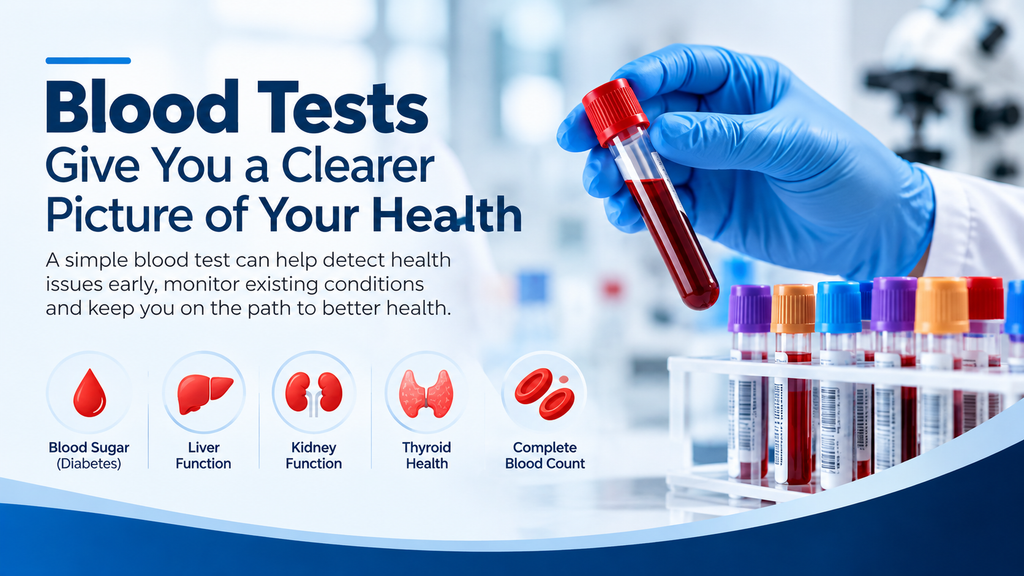
A blood test can offer useful clues about what is happening inside your body. Whether it is part of a routine health checkup, a follow-up recommended by your doctor, or an investigation into a particular symptom, blood testing can help healthcare professionals assess your health and decide whether further evaluation is needed.
Some health conditions may not cause noticeable symptoms in their early stages. When recommended for your individual needs, blood tests can help identify changes and monitor health over time. If you are looking for blood tests in Chandigarh, this guide explains common tests, what they measure, and how to prepare.
What Can a Blood Test Reveal?
A blood test involves collecting a small sample of blood and analyzing it for specific cells, chemicals, proteins, hormones, or other substances. The information it provides depends on the test ordered. Results are interpreted alongside symptoms, medical history, and other findings; a blood test alone does not always confirm a diagnosis.
Common Types of Blood Tests
1. Complete Blood Count (CBC)
A complete blood count measures components such as red blood cells, white blood cells, hemoglobin, and platelets. Doctors may recommend it when investigating symptoms, checking for possible anemia or infection, or monitoring certain health conditions.
2. Blood Sugar Tests
Blood glucose tests measure the amount of sugar in the blood and are commonly used to screen for or monitor diabetes. Depending on the clinical need, a doctor may recommend fasting blood glucose, a post-meal test or HbA1c, which reflects average blood sugar over a longer period.
3. Lipid Profile
A lipid profile measures blood fats, including total cholesterol, HDL cholesterol, LDL cholesterol, and triglycerides. These results can help a doctor assess cardiovascular risk alongside factors such as blood pressure, smoking history, and family history.
4. Liver Function Test (LFT)
A liver function test measures substances such as liver enzymes, proteins, and bilirubin. It may help assess liver health, investigate certain symptoms, or monitor a known condition or treatment.
5. Kidney Function Test (KFT)
Kidney function tests may include measurements such as creatinine, urea, and electrolytes. They help doctors assess kidney function and may be recommended for people with conditions such as diabetes or high blood pressure or when monitoring certain treatments.
6. Thyroid Function Tests
Tests such as TSH, T3, and T4 help assess how the thyroid gland is working. A doctor may recommend them when investigating symptoms such as unexplained weight changes, tiredness, or changes in heart rate. These symptoms can have several causes, so results should be interpreted by a qualified healthcare professional.
7. Vitamin D and Vitamin B12 Tests
Vitamin D and Vitamin B12 tests measure the levels of these nutrients in the blood. They may be recommended when symptoms, diet, medical history, or other risk factors suggest that testing could be useful. Not everyone needs these tests routinely.
Why Are Blood Tests Important?
- They can help investigate symptoms and support a diagnosis.
- They can form part of a preventive health assessment when appropriate.
- They help monitor conditions such as diabetes or thyroid disorders.
- They can help clinicians assess how a treatment is working.
- They provide information that can be compared with previous results over time.
The right tests depend on the person. A healthcare professional can help decide which investigations are appropriate rather than ordering a large panel without a clear reason.
When Should You Consider a Blood Test?
Your doctor may recommend blood testing during a routine checkup, when investigating persistent symptoms, when monitoring an existing condition or when checking the effects of certain medicines. There is no single testing schedule that suits everyone; age, health history, symptoms and risk factors all matter.
How to Prepare for a Blood Test
Check whether fasting is required.
Some tests require fasting, while many do not. Follow the instructions provided by your doctor or laboratory. If you have eaten before a test that requires fasting, let the staff know before your sample is collected.
Ask about medicines and supplements.
Tell your healthcare professional about the medicines, vitamins, and supplements you take. Do not stop prescribed medication unless your doctor tells you to.
Follow timing instructions.
Some tests may need to be collected at a particular time of day or under specific conditions. Confirm any special instructions before your appointment.
Bring earlier reports if available.
Previous results may help your doctor understand changes over time and interpret your current report in context.
What Happens During Blood Sample Collection?
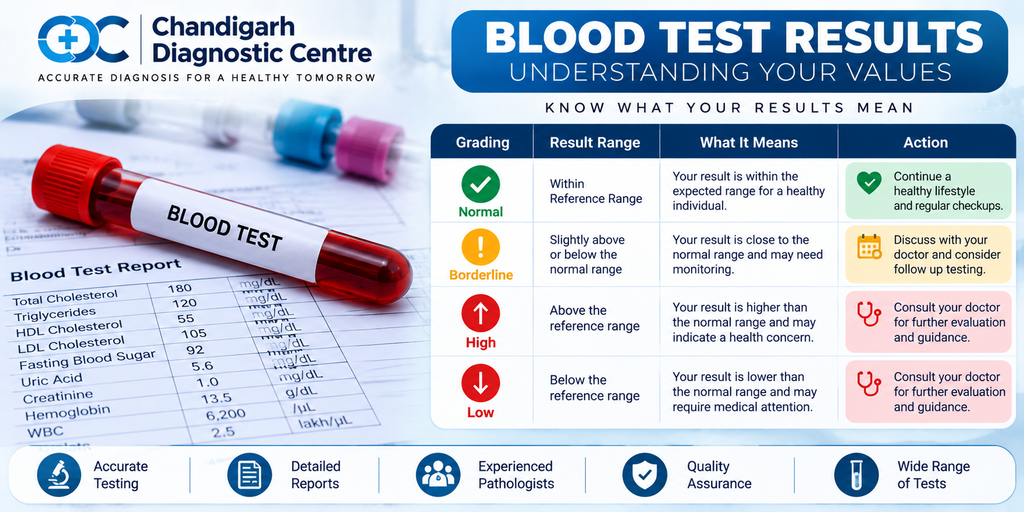
For a routine blood test, a trained healthcare professional usually cleans an area of skin and uses a small needle to collect blood, often from a vein in the arm. You may feel a brief prick or mild discomfort. After collection, pressure is applied to the area to help stop bleeding. The sample is then sent for laboratory analysis.
The time required for a report varies according to the test and laboratory processing requirements. Ask the diagnostic centre about the expected report timeline when arranging your test.
Blood Test Costs in Chandigarh
The cost of a blood test in Chandigarh varies by test type, the number of parameters included and whether you need an individual investigation or a health checkup package. Before booking, ask about the price, preparation requirements and expected report timeline. If you need several tests, an itemised price can help you understand what is included.
You can contact Chandigarh Diagnostic Centre to enquire about the availability and pricing of the tests you need.
How to Choose a Diagnostic Centre in Chandigarh
- Check that sample collection and handling procedures follow appropriate hygiene practices.
- Ask about laboratory quality-control processes and relevant accreditations, where applicable.
- Choose a centre that provides clear preparation instructions.
- Confirm the expected report timeline and how reports will be shared.
- Consider location and how to contact the centre if you have administrative questions.
When comparing centers, consider the test you need, the services available, and the clarity of the information provided—not price alone.
Comparison Table: Choosing a Blood Testing Centre in Chandigarh
Services, supervision, and report timelines vary between providers and by test. Use this comparison as a general guide and confirm the details that matter for your specific test before booking.
| Parameter | Large Diagnostic Chain | Small Collection Centre | Chandigarh Diagnostic Centre |
| Diagnostic services | Range varies by branch. | May be limited | Blood tests and other diagnostic services confirm the specific test. |
| Medical supervision | Depends on the facility and test | Depends on the facility | Ask the center about the supervision relevant to your test. |
| Report turnaround time | Depends on the test | Varies | Confirm the expected timeline when booking. |
| Home sample collection | May be available | May be available | Not available |
| Routine blood tests | Commonly offered; the test menu varies. | Depends on facilities | Enquire about the required test. |
| Specialized blood tests | Availability varies. | May be limited | Confirm availability before visiting. |
| Report access | Online or offline, depending on provider | Varies | Ask the center about report delivery options. |
| Location | Depends on the branch | Usually local | SCO 402, near Petrol Pump, Sector 37D, Chandigarh |
| Best suited for | People seeking services across a chain’s branches | People seeking selected local tests | People seeking diagnostic services in Chandigarh |
Blood Testing at Chandigarh Diagnostic Centre
Chandigarh Diagnostic Centre is located in Sector 37D, Chandigarh. If you need a blood test for a routine checkup, a doctor’s recommendation or monitoring an existing condition, contact the centre to ask about the relevant test, preparation instructions and report timelines.
Address: SCO 402, near Petrol Pump, Sector 37D, Chandigarh – 160036.
Please confirm test availability and any special instructions before visiting.
Frequently Asked Questions
Which blood tests may be included in a routine checkup?
Depending on your age, symptoms and risk factors, your doctor may recommend tests such as a CBC, blood glucose or lipid profile, along with other investigations if needed. There is no universal set of tests for everyone.
Do all blood tests require fasting?
No. Many tests do not require fasting. Some glucose or lipid-related tests may require it depending on the specific test and your clinician’s instructions. Confirm before your appointment.
How long do blood test reports take?
Report timelines vary by test and laboratory processing requirements. Ask the diagnostic centre for the expected turnaround time.
Can blood tests detect diabetes?
Tests such as fasting blood glucose and HbA1c are commonly used to screen for and diagnose diabetes. A healthcare professional can advise which test is appropriate and interpret the results.
Can I get a blood test if I have no symptoms?
Some tests are recommended for preventive screening or monitoring known conditions. The need for testing depends on individual health factors, so discuss screening with your healthcare professional.
Where can I enquire about blood tests in Chandigarh?
You can contact Chandigarh Diagnostic Centre at SCO 402, near Petrol Pump, Sector 37D, Chandigarh, to enquire about available tests, prices and preparation instructions.
Conclusion
Blood tests can help doctors assess health, investigate symptoms and monitor existing conditions. Understanding what a test measures and following the recommended preparation instructions can make the process easier.
more info Visit Us :https://chandigarhdiagnosticcenter.in/blood-test-centre-in-chandigarh/