

Medical diagnosis often begins with a conversation, a physical examination, and a few carefully selected tests. When a doctor needs to look inside the body, an ultrasound scan is often one of the imaging methods considered. It helps create images of internal organs and soft tissues so that doctors can investigate symptoms and make informed decisions about further care.
For people searching for an ultrasound in Chandigarh, understanding why the scan is recommended, what it can show, and how to prepare can make the experience easier. This guide explains the importance of ultrasound in medical diagnosis, its common uses, benefits, and limitations.
What Is an Ultrasound Scan?
Ultrasound, also known as sonography, is a medical imaging technique that uses high-frequency sound waves to create pictures of structures inside the body.
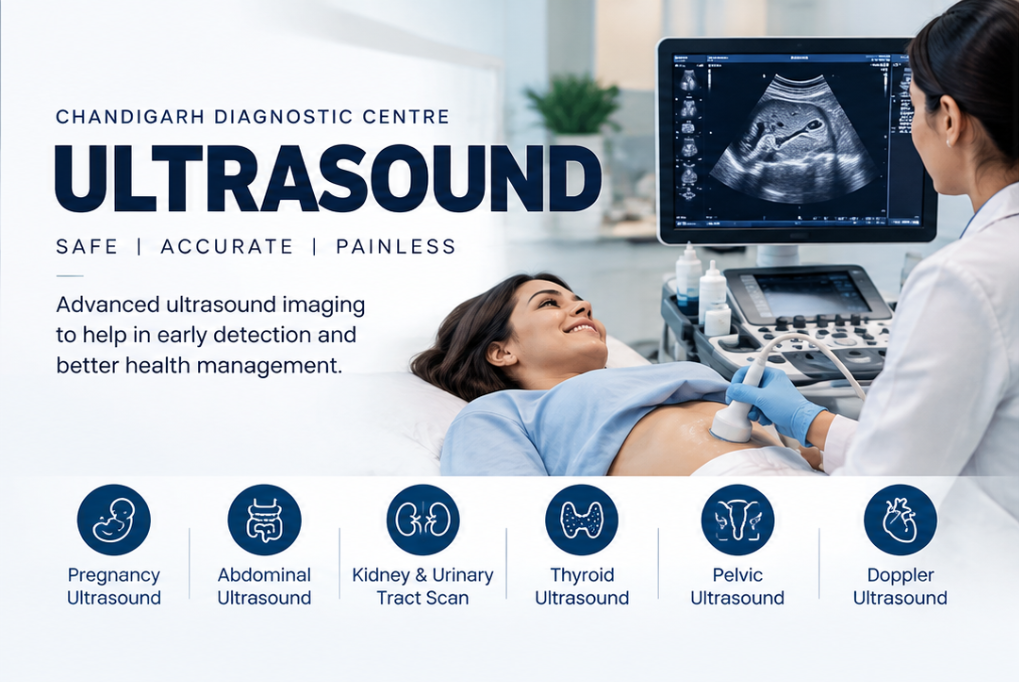
During most examinations, a healthcare professional applies a clear gel to the skin and moves a small device called a transducer over the area being examined. The device sends sound waves into the body and receives the echoes that return. A computer converts these echoes into images that help the doctor examine the relevant organs and tissues.
Unlike X-rays and CT scans, standard diagnostic ultrasound does not use ionizing radiation. Most examinations are non-invasive and do not require injections.
Why Is Ultrasound Important in Medical Diagnosis?
1. Helps Investigate Symptoms
Ultrasound can help doctors investigate symptoms such as abdominal pain, swelling, discomfort, or a lump in a particular area.
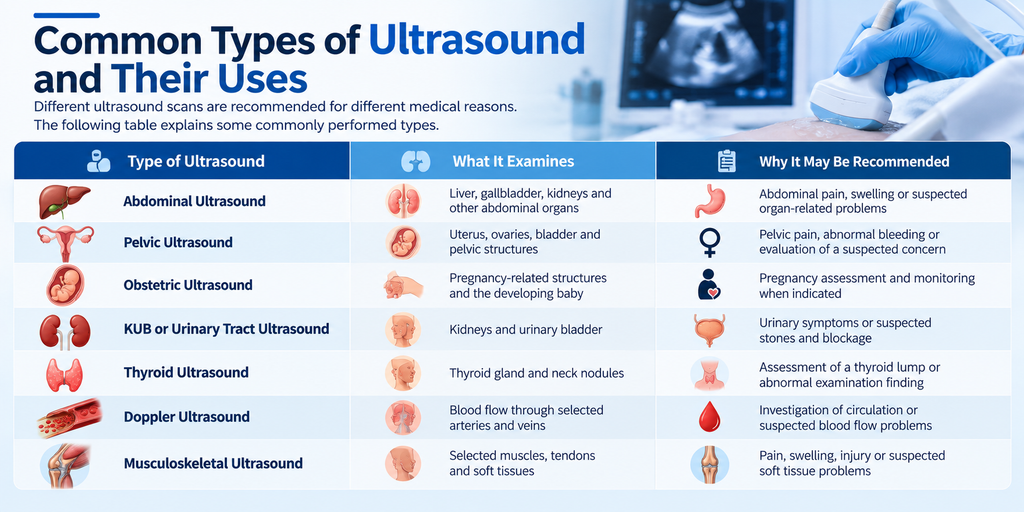
For example, an abdominal ultrasound may be used to examine the liver, gallbladder, kidneys, and other abdominal structures. The findings help doctors understand possible causes of symptoms and decide whether further testing or treatment is needed.
2. Provides Real-Time Images
One of the important features of ultrasound is its ability to produce images in real time. This allows healthcare professionals to observe certain structures and movements during the examination. Real-time imaging can also help guide selected medical procedures such as needle placement for a biopsy or drainage of a fluid collection.
3. Helps Assess Blood Flow
Doppler ultrasound is a specialized technique used to evaluate blood movement through certain arteries and veins. It may help doctors assess circulation, investigate suspected blood vessel problems, and examine blood flow to selected organs. The findings are interpreted alongside symptoms and other clinical information.
4. Supports Pregnancy Care
Ultrasound plays an important role in pregnancy care. Depending on the stage of pregnancy and the reason for the scan, it can help assess the developing baby, pregnancy progress, and selected aspects of development. The timing and type of pregnancy ultrasound should be based on the advice of the treating healthcare professional.
5. Examines Internal Organs and Soft Tissues
Ultrasound is useful for examining many organs and soft tissues that may not be clearly visible on a standard X-ray. It can be used to assess the liver, gallbladder, kidneys, urinary bladder, thyroid gland, uterus, and ovaries. Selected muscles, tendons, and other soft tissues can also be examined using ultrasound.
Benefits of Ultrasound Imaging
Ultrasound is widely used because it offers several practical benefits when it is appropriate for the clinical question.
- No ionizing radiation: Standard diagnostic ultrasound uses sound waves rather than X-rays.
- Usually non-invasive: Most scans involve an external probe and gel without needles or injections.
- Real-time imaging: Healthcare professionals can observe structures and movement during the examination.
- Wide range of applications: Different ultrasound techniques can examine organs, soft tissues and blood vessels.
- Useful for follow-up: Ultrasound may help monitor selected conditions when recommended by a doctor.
- Guidance for certain procedures: Real-time images can help clinicians guide selected needle-based procedures.
Although ultrasound offers these advantages it is not always the best imaging test for every condition. The choice depends on the body area and the medical question being investigated.
How to Prepare for an Ultrasound Scan
Preparation depends on the type of ultrasound you need.
Check Whether Fasting Is Required
Some abdominal ultrasound examinations require fasting for a specific period. Follow the instructions provided by your healthcare professional or diagnostic centre.
Drink Water if Instructed
Certain pelvic or urinary tract scans may require a full bladder. You may be asked to drink water before the examination. Follow the instructions given for your specific scan.
Wear Comfortable Clothing
Comfortable clothing can make it easier to access the area being examined.
Bring Previous Reports
If you have earlier ultrasound reports or related medical investigations, bring them along if requested. They may help the doctor compare findings over time.If you are unsure about any preparation instructions contact the diagnostic centre before your appointment.
What Happens During an Ultrasound Examination?
For most external ultrasound scans you will lie on an examination bed while the healthcare professional applies gel to the skin. The transducer is moved gently over the area to capture images.You may be asked to change position or hold your breath briefly depending on the examination. The gel is usually wiped off once the scan is complete.Most routine ultrasound examinations are not painful although pressing the probe over a tender area may cause temporary discomfort. The duration varies depending on the type of scan and the complexity of the examination.
Understanding Your Ultrasound Report
After the examination the images are reviewed and interpreted by an appropriately qualified clinician. A report is prepared describing the findings.The report may show normal findings or identify an observation that requires further assessment. Sometimes additional tests or follow-up imaging may be recommended.An ultrasound report should not be interpreted in isolation. A normal scan does not rule out every possible cause of symptoms and some conditions cannot be confirmed through ultrasound alone.Your treating doctor can explain the findings in relation to your symptoms, medical history and other test results.
Limitations of Ultrasound
Although ultrasound is useful for many diagnostic purposes it has certain limitations.Sound waves do not travel well through air or bone. Bowel gas body habitus and the depth of a structure may also affect image quality.
Depending on the clinical situation a doctor may recommend another imaging method such as an X-ray CT scan or MRI. Laboratory tests or follow-up examinations may also be required.
A recommendation for another test does not automatically mean that a serious problem has been found. It may simply be the most suitable way to investigate the concern.
Choosing an Ultrasound Centre in Chandigarh
When looking for an ultrasound centre in Chandigarh consider whether the centre can perform the specific examination recommended by your doctor.
You may wish to ask about:
- Availability of the required ultrasound scan
- Preparation instructions before the appointment
- The expected report timeline
- The qualifications of the professional interpreting the scan
- Whether previous reports should be brought along
Clear instructions and appropriate clinical interpretation are important parts of the diagnostic process.Ultrasound Services at Chandigarh Diagnostic Centre. Chandigarh Diagnostic Centre is located at SCO 402 near Petrol Pump Sector 37D Chandigarh.If your doctor has recommended an ultrasound scan you can contact the centre to enquire about available diagnostic services appointment details and preparation instructions.Please confirm the availability of your required ultrasound examination before visiting.
Frequently Asked Questions About Ultrasound
1. Is ultrasound safe?
Standard diagnostic ultrasound does not use ionising radiation and has no known harmful effects when used appropriately for medical purposes. It should be performed for a suitable clinical reason by trained professionals.
2. Does every ultrasound scan require fasting?
No. Preparation depends on the scan. Some abdominal examinations may require fasting while pelvic or urinary tract scans may require a full bladder.
3. Can ultrasound detect all diseases?
No. Ultrasound can help identify many abnormalities but cannot detect or confirm every disease. Additional tests may be needed depending on the symptoms and findings.
4. How long does an ultrasound scan take?
The duration depends on the type of scan and the complexity of the examination. Ask the diagnostic centre about the expected appointment time when booking.
5. Do I need a doctor’s advice before getting an ultrasound?
A healthcare professional can determine whether ultrasound is appropriate and which type of examination is needed based on your symptoms and medical history.
6. When will I receive my ultrasound report?
Report timelines vary by scan type and facility. Confirm the expected turnaround time with the diagnostic centre when arranging your appointment.
Fore more info visit – https://chandigarhdiagnosticcenter.in/ultrasound-centre-in-chandigarh/