
Okay, so. Last winter my uncle came home from a blood test looking like he’d just lost a court case. Sugar flagged. Cholesterol flagged. The whole page in red. He sat down with his tea (yes, tea, we’ll get to that) and announced to the room that he was finished. Done. Call the relatives.
Here’s what he left out. Two parathas and a big glass of lassi the night before, then a biscuit with his morning chai because “it’s just a biscuit.” Anyone who’s stood in line at a diagnostic centre Chandigarh has to offer on a Sunday morning has met a version of him. Honestly, I’ve probably been him.So this is for him, and for you. A few small slip-ups that quietly wreck a lab report. Nothing fancy. Just stuff nobody bothers to mention.
The Chai That Doesn’t Count (But Does)
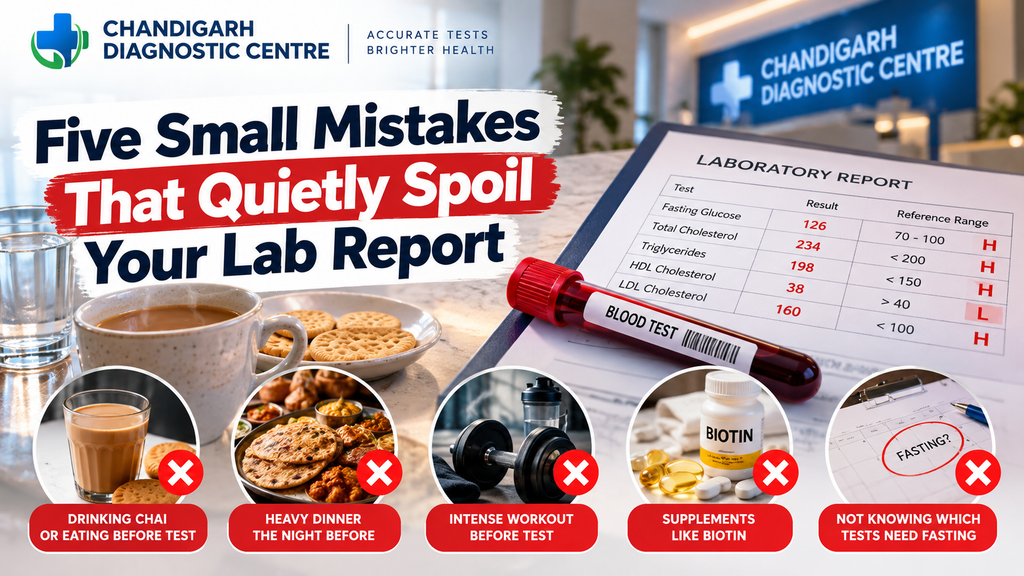
Fasting means fasting. I know, I know. For fasting sugar and lipid tests, most labs want eight to twelve hours with nothing except plain water. No chai. No biscuit. No tiny sip of juice “just to wake up.” It’s rough at 7 a.m., I won’t pretend otherwise.
But water? Water is allowed, and people forget that completely. They get nervous, skip it, and show up bone dry. Then the technician spends five minutes poking around for a vein while you stare at the ceiling and think about your life choices. Drink the water. Have your chai after. It’ll taste better anyway.
The Dinner Nobody Remembers
Everyone remembers the morning of the test. Nobody thinks about the night before, which is funny, because it matters. A heavy oily dinner, a late drink, one more round of pakoras (we’ve all said “last one” and lied) can still show up in your cholesterol numbers the next day. Even if you fasted perfectly after.
And it’s wedding season half the year around here, so believe me, I get it. The food is too good. Still, try making the night before a test plain and a little dull. Light dinner. No alcohol. Early bed. Boring, sure. But the report you get back will actually look like you.
The Gym and the Supplements
If you smashed leg day yesterday evening, maybe don’t book your test for the next morning. Hard workouts can nudge a few markers around, mostly the muscle and kidney ones, and then you’re lying awake worrying about something that was only soreness. Silly, but it happens.
Supplements are the other trap, and a sneaky one. Biotin sits in loads of hair and skin tablets, and it can interfere with some thyroid and hormone tests, sometimes making numbers read too high or too low. So tell the lab if you take it. And please, don’t quietly stop a prescribed medicine because a test is coming. Call your doctor. Ask. I’ll keep saying it.
The Tests That Don’t Need You Hungry
This one honestly surprised me when I found out. Not every test needs an empty stomach, and plenty of people go hungry for nothing. Vitamin D usually doesn’t need fasting at all. Thyroid tests tend to work better in the morning, since hormone levels drift through the day.
So ask when you book. Ten seconds, that’s all. And if you’re on thyroid medicine, ask your doctor whether to take it before or after the sample. Most people never ask, then wonder why the reading looks strange. Don’t be most people.
The Report Itself
So the report lands in your inbox and one number has a little red flag next to it. Breathe. Please don’t google it at midnight. You will somehow turn a slightly high reading into a rare disease. I’ve done this. It was not a good night.
A number outside the range isn’t a diagnosis. Ranges shift a little between labs, and your age and health history change what “normal” even means for you. Keep your old reports somewhere safe too, because a few years of numbers tell a far better story than one lonely reading. Take the whole pile to your doctor. And lots of labs around the Tricity do home sample collection now, which is a blessing for older parents. Same prep rules apply at home though. No shortcuts, sorry.
FAQs
Can I drink water before a fasting blood test?
Yes, and it usually helps. Plain water is fine. Skip tea, coffee, juice and anything sweet.
How long should I fast?
Usually eight to twelve hours for fasting sugar and lipid tests, but it can vary. Check with the lab when you book.
Should I take my regular medicines on test day?
Don’t skip them on your own. Some are fine as usual, others depend on timing. Ask your doctor first.
Is home sample collection reliable?
Generally, yes, if trained staff collect the sample and it reaches an accredited lab quickly. NABL accreditation is worth looking for.
Does one abnormal result mean I’m ill?
Not necessarily. Prep mistakes, stress and ordinary day-to-day ups and downs can all play a part. Your doctor may just ask for a repeat test.
Final Thoughts
My uncle’s second report, done properly after a boring dinner and zero biscuits, came back looking almost fine. He still insists the first lab got it wrong. We stopped arguing about it months ago.
Anyway, here’s the thing. A good lab matters, of course it does. But how you show up matters just as much. A bit of prep, honest answers about your medicines and supplements, and a calm head when the report arrives. That’s it. Treat the day before your test like part of the test, and you’ll end up with numbers you can actually trust. And maybe skip the biscuit.